
The Violin Lesson
Pushkin Press
(world English rights)
Sindbad
(Russian rights)
Mladinska Kniga
(Slovenian rights)
Spanish rights under offer
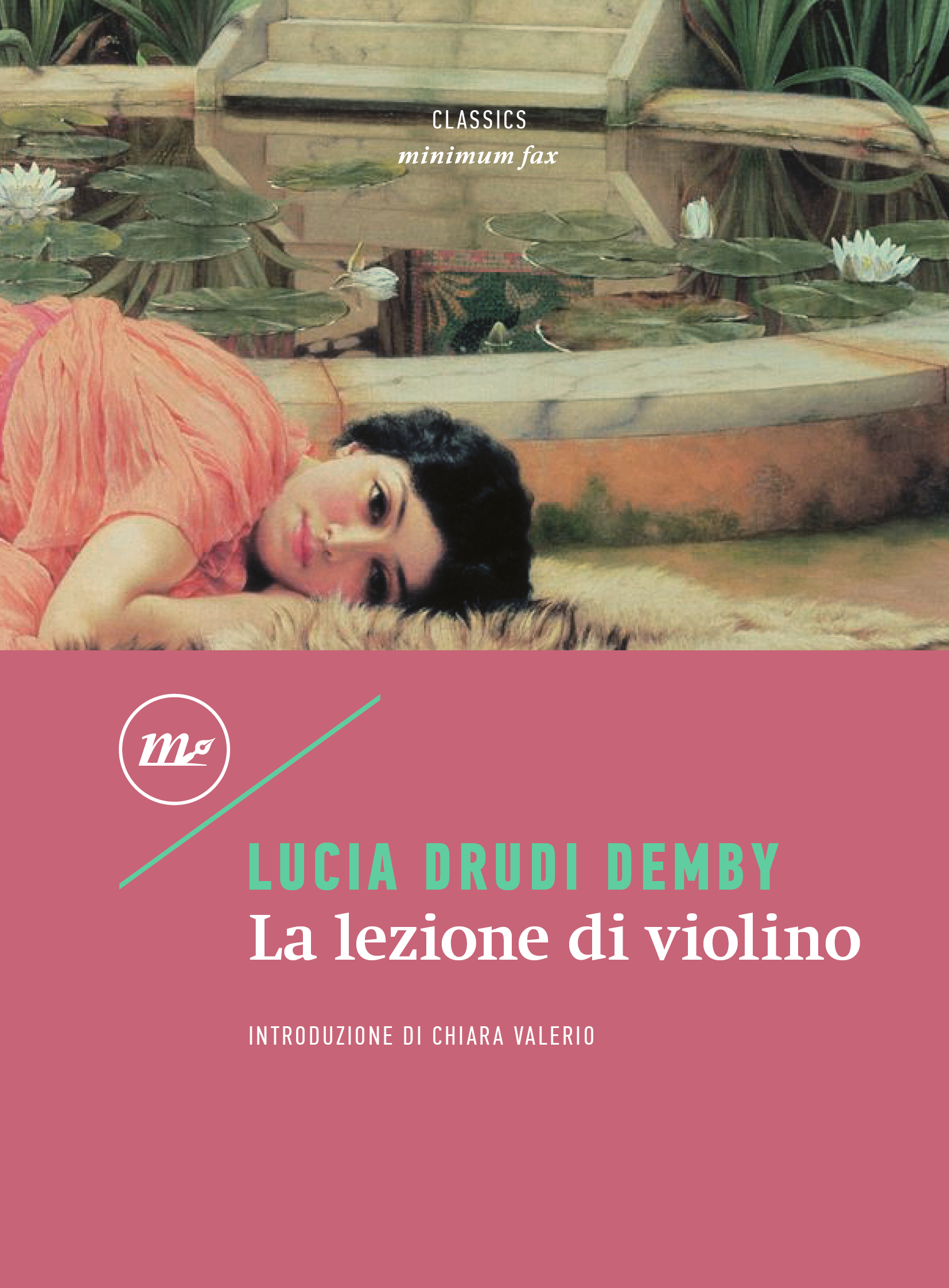
Fifteen orphans live in a boarding school, in a villa reminiscent of a convent. Their life of "serene joy" is regular and punctuated by lessons, walks, and prayers, under the constant gaze of the saint, a statue that watches over them from the center of a goldfish pond. The girls are kind, polite, diligent, and don't look around too much to avoid being brash. But the crystalline, suspended calm of their identical one after the other days is shattered by the arrival of Enea, a new and mysterious girl who bursts into their daily lives with all the force of the outside world from which they had until then remained sheltered: from then on, nothing will be the same.
Enea is "beautiful," "her eyes are truly lilac, and her hair is black as night," and her manners are somewhat brusque: she talks to strangers, tears the sheets, spills wine on the tablecloth, dares to say—during the five minutes of silence—that the villa is ugly, "she carries her disorder wherever she goes." But above all, through the cracks she causes in the surface of things, she insinuates doubt and fear that outside the boarding school (but also inside, and within the girls themselves) there is something different, disturbing yet alive, dangerous and restless, that calls and attracts.
Narrated in the form of a diary by one of the orphans, The Violin Lesson is a subtly unsettling novel, constantly teetering on the edge of fantasy, lyrical yet crossed by an underlying vein of irony.
Originally published in 1977 by Adelphi, it is a small literary gem that fits into that peculiarly alienating constellation of boarding school literature that illuminates the dark side of adolescence, ranging from Frank Wedekind's Mine-Haha to Joan Lindsay's Picnic at Hanging Rock.
Press reviews
Marzia Fontana - la Lettura
Lucia Drudi Demby gioca in modo disinvolto con i generi letterari, trascorre dal realismo al fantastico sempre sul labile confine fra realtà e immaginazione.Leggi
Elena Loewenthal - Tuttolibri
«La lezione di violino» è un libro ironico e spietato sull'infanzia, quella vera e quella immaginaria.Leggi